Dancing About Architecture
Back in 2011, I thought it would be radical to take an innovative technique from an iconic French chef and adapt it seamlessly into Mexican cooking.

A long time ago, when I was still making desserts at wd~50, we hosted Michel Bras for a special dinner. The entire experience was thrilling in several ways and I’m grateful for all of it—the work, the pressure, the generosity, the memories.
Bras’ desserts are genius and completely singular to him. (He invented molten chocolate cake.) But what always struck me most was that nearly every dessert centered around a unique structure or form. The architecture was inseparable from the flavor.
One of the components he had me making for that dinner were these crisp candied potato waves that sandwiched brown butter mousse and caramel. To make them, I had to peel potatoes and sheet them thinly. The slices were vacuum sealed with simple syrup, carefully shingled between parchment, and cut into rectangles.
Those rectangles were draped across these bizarre custom trays that looked like they came from a laboratory or a shipyard. They were heavy flat metal sheets with evenly spaced copper pipes bolted into them. The potato rectangles were laid across the pipes and then additional pipes were pressed down between them before the whole thing went into the oven. The result was this impossibly delicate crisp wave.
Years later, when I was opening Empellón Cocina, I became obsessed with the idea that Mexican cuisine was capable of absorbing outside influence without losing itself, the same way El Bulli expanded Spanish cuisine without destroying its identity.
At Cocina, I started looking at masa in a more distilled way. It’s basically a semi-gelatinized starch dough. Once you think of it like that, a lot of possibilities open up. This was 2011 and I wanted the restaurant to make a statement. I thought it would be radical to take an innovative technique from an iconic French chef and adapt it seamlessly into Mexican cooking.
So I called my dad, who is an extremely handy person, and he recreated the same trays Bras had used at wd~50. These were not easy objects to make. There was no company selling them. No online storefront. No “chef kit.”
It makes me think about those stories people tell about walking to school barefoot. “You kids and your pre-made silicone molds with matching recipes. Back in my day, we had to build the equipment ourselves in a metal shop.”
Eventually I figured out how to manipulate a tamal preparation into an impossibly thin crisp tile with that same wavy form. Delicate. Architectural. Still beautiful.
Honestly, it still feels as innovative now as it did then.
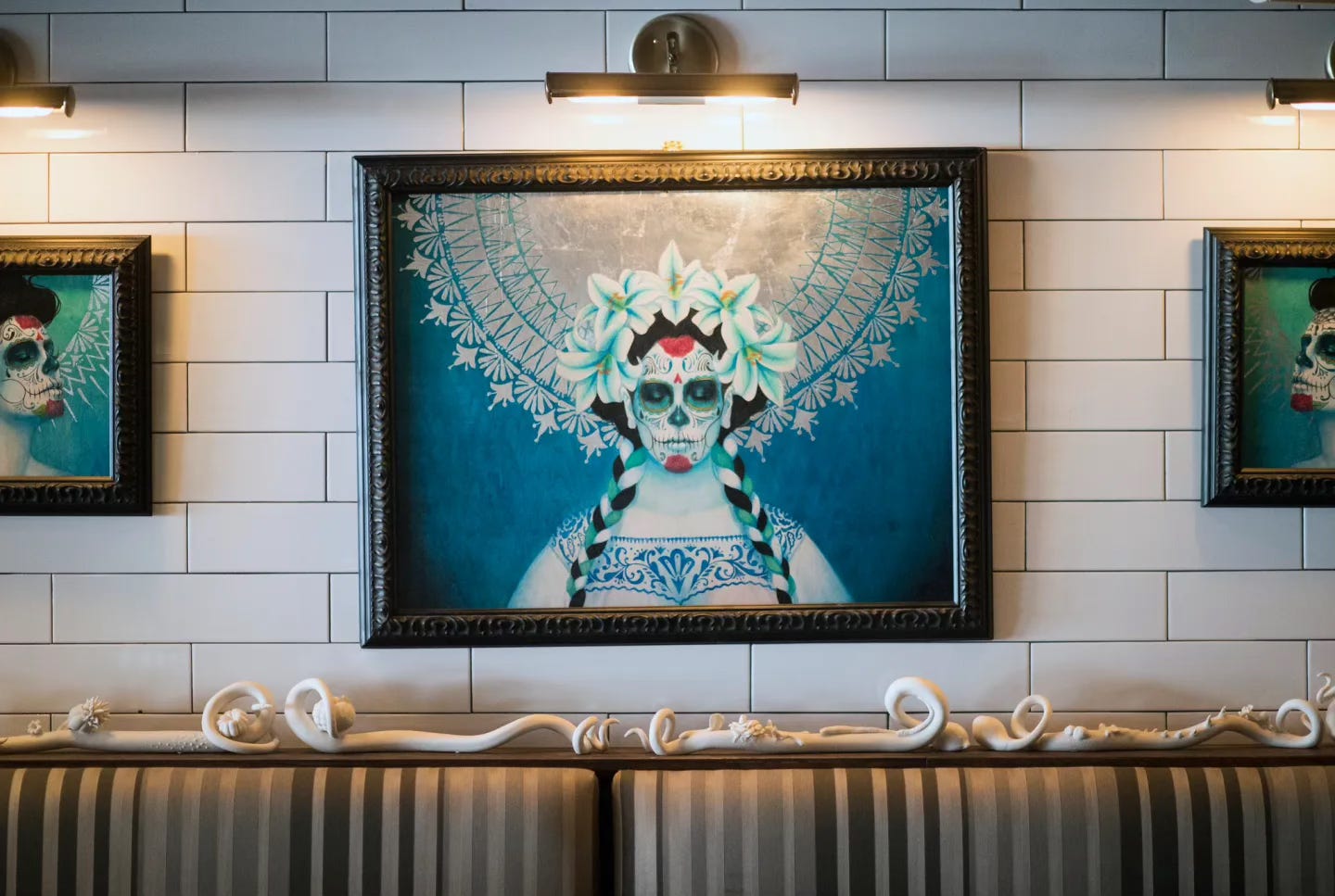
Fifteen years later, Empellón Cocina still feels ahead of its time to me. Nostalgia is poison and nothing should be blindly canonized, but recently we did a one-night Cocina reunion dinner at 510 Madison with Isabel Coss, Ham El-Waylly, Jackie Carnesi, and Matt Conroy. The people who connected with that work back then all showed up again. It felt creatively self-indulgent, but I also felt like I’d carry regret if I didn’t do it.
It was never supposed to sell out a stadium like a pop star. That was never the point. True creativity was (and still is) the point.
Even more recently, just like we did with 25 modern pastry techniques, I’ve been documenting ideas and techniques that were formative or original to me and sharing them with anyone paying attention. My hope is that you do not copy, but rather see what it makes you think of, and then develop whatever that is.
I may not have the biggest Instagram following, but I do think I have an unusually intelligent and high-quality one.
Thank you.
Further reading: https://ny.eater.com/2011/12/5/6632693/alex-stupak-makes-empellon-cocinas-shrimp-tostada