To The Extreme
In heavy metal or kitchens: when everything starts to feel stale, where do you go?

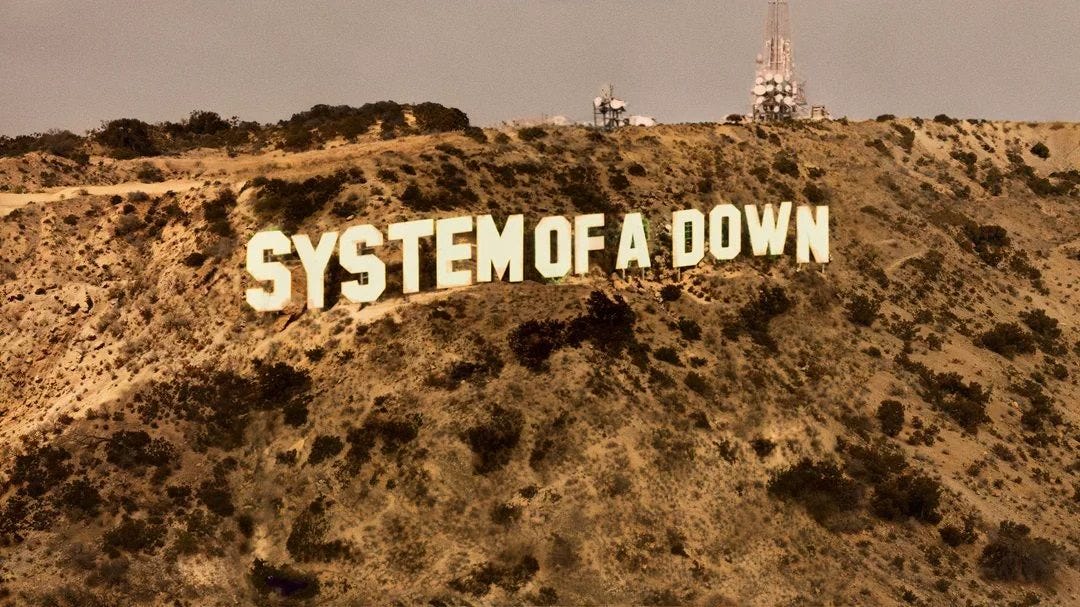
I recently listened to a two-part episode of the podcast Tetragrammaton with Rick Rubin, where he speaks with System Of A Down’s Daron Malakian solely about the subject of heavy metal.
I am a massive fan of metal, and any time I can listen to intelligent people speak about its evolution at length, I’m in. They covered a lot of territory over roughly four hours, starting with identifying certain sounds in psychedelic music that likely contributed to metal, progressing all the way through to the birth of subgenres like grindcore, death metal, and black metal.
Daron explains that, as a fan of all these movements, creating music himself eventually left him in a difficult place creatively. Making music that was the fastest, the most technical, or the most satanic had all begun to feel finished, as if those paths had already been exhausted.
I had never realized this before, but his band, System of a Down, is responsible for something genuinely innovative within metal. They harmonized vocals. It sounds simple, but I had never really thought about it, and I couldn’t think of another metal band that did that.
What stayed with me most from their conversation, though, was the emotion he described around exhausting a creative path and needing to carve a new one.
Around the time I was coming up in serious kitchens, stories of El Bulli were hitting us in a similar way. They were polarizing, and I was deeply drawn to their thought processes. This was well before social media or smartphones. You had to order their books directly from them and wait months for receipt. If you wanted to see the work, you went to Madrid or Barcelona and sat through culinary conferences where chefs actually demonstrated their techniques on stage.
I stress that last point because, since the MAD Symposiums of the 2010s, I hear these gatherings are now largely TED-style talks. I remember watching Albert Adrià work and hearing people scoff in the audience. That reaction only made me more invested. Recently, as a guest on Dave Chang’s podcast, we talked about this period at length. From my perspective, it was never really about the dish itself; it was about revealing new techniques for making dishes. It felt closer to someone creating a new font that a graphic designer might one day use.
Over time, the techniques grew more extreme and more technical. I was very fortunate to be a minor contributor to that body of work. Many of my more recent Instagram posts, in fact, are not especially representative of how I work anymore. I decided I would never write a book about that period, so instead we are documenting it in this way.
This brings me back to something Daron said on Tetragrammaton about death metal. As it became more extreme and more technical, it eventually moved beyond even the best work its artists had produced. That feeling mapped almost perfectly onto the culinary era I am thinking about now.
When everything starts to feel stale, where do you go? To be clear, there are chefs cooking the best possible versions of that movement today. The work is more evolved, more refined, and more personal than ever. Enigma, Disfrutar, and Somni immediately come to mind.
What Daron described, and what ultimately pushed him to start a band with harmonized vocals, catchy hooks, Armenian influence, political rage, and absurdist lyrics, resonated deeply with me. It mirrors what I was facing when I decided to look at Mexican food through an honest American lens, and to recognize that masa could be manipulated in new ways.
Even now, fifteen years later, I am still often asked, why Mexican? It sounds like a simple question, but it isn’t. This conversation brought me back to that complexity.